Lowering Embodied Carbon in Data Center Construction with Ozinga CarbonSense®
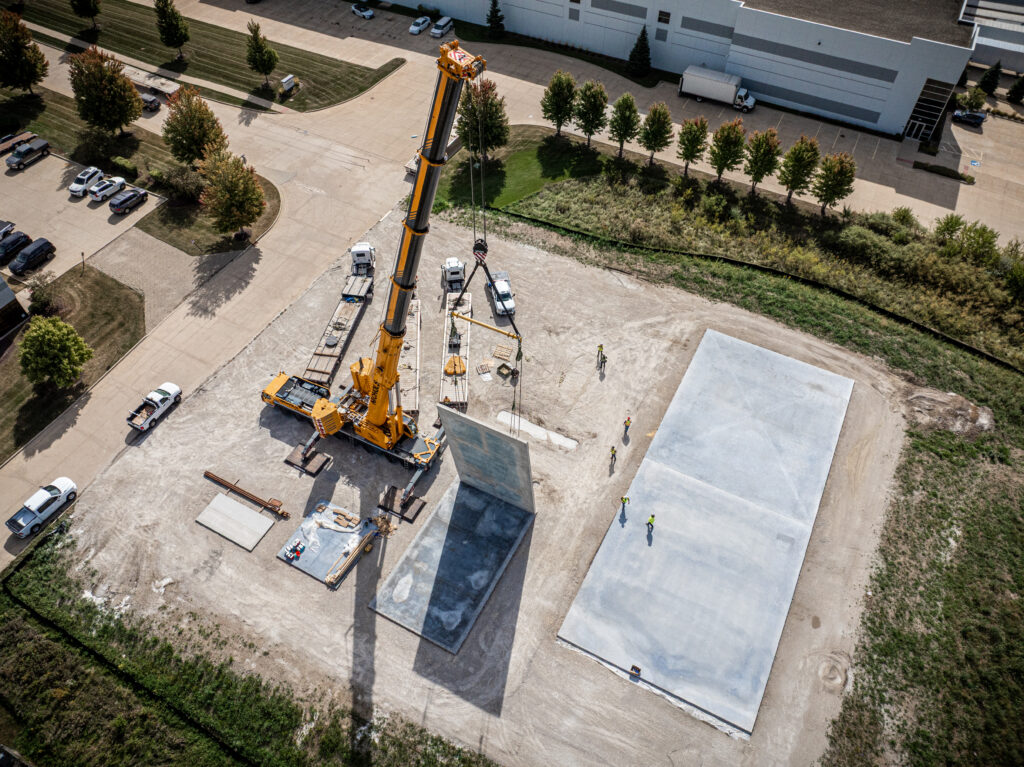
A leading technology company partnered with Ozinga, Wiss, Janney & Elstner Associates (WJE), and Scurto Cement to pilot a low-carbon concrete solution for data center construction. The project compared a traditional portland limestone cement mix against Ozinga’s CarbonSense® Cement, an ASTM C1157-compliant performance cement. The results demonstrated that sustainability and structural performance are not mutually exclusive: CarbonSense® Cement reduced global warming potential by up to 60% while exceeding strength requirements across multiple applications.
Overview
As data center construction accelerates to meet the demands of artificial intelligence, cloud computing, and digital infrastructure, the industry faces mounting pressure to balance rapid growth with sustainability commitments. With an estimated $1.8 trillion set to be invested in data center projects over the next five years, the materials used to build this infrastructure carry significant weight in meeting net-zero goals.
Cement production alone accounts for 8-9% of total greenhouse gas emissions contributed by construction materials, making it a critical focus area for companies looking to reduce their embodied carbon footprint. A large technology company recognized this challenge and sought a concrete solution that could deliver both the performance and the environmental profile required for a new data center project.
The Problem
The client needed to validate a lower-carbon concrete mix design for use in data center construction without compromising on structural integrity. Two specific applications were tested as part of this pilot program:
- Interior slab-on-grade: This application required a mix design capable of achieving 4,000 PSI strength at 28 days, a standard benchmark for interior flooring systems in commercial and industrial facilities.
- Tilt-up wall panels: This application demanded a mix capable of reaching 500 PSI flexural strength within just three days, allowing panels to be safely lifted and erected using industrial cranes.
Meeting these performance thresholds is non-negotiable for data center construction, where structural reliability is paramount. The challenge was determining whether a lower-carbon cement alternative could meet or exceed these standards while significantly reducing embodied carbon.
The Solution
To address this challenge, Ozinga partnered with WJE Engineering and Scurto Cement to design and execute a comprehensive pilot test program. The test compared two mix designs head-to-head:
- A traditional portland limestone cement mix design
- Ozinga CarbonSense® Cement, a performance cement that meets ASTM C1157 standards
Both mixes were developed, tested, and validated using Ozinga’s CCRL/ASTM-certified research and development lab, leveraging ConcreteAI™, a proprietary machine learning program that predicts mix performance and shortens time to market.
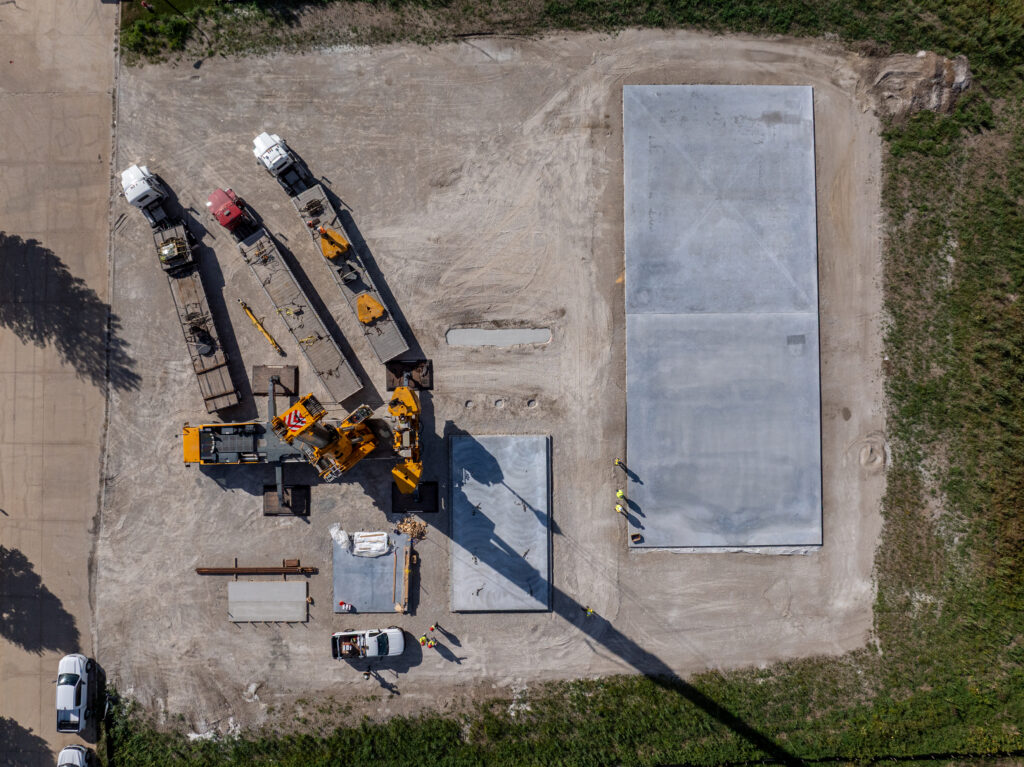
The pilot program included two distinct pours:
Slab-on-Grade Pour: Engineers from WJE used tools like maturity meters to measure and record real-time data once the concrete was poured, ensuring accurate strength and performance tracking throughout the curing process.
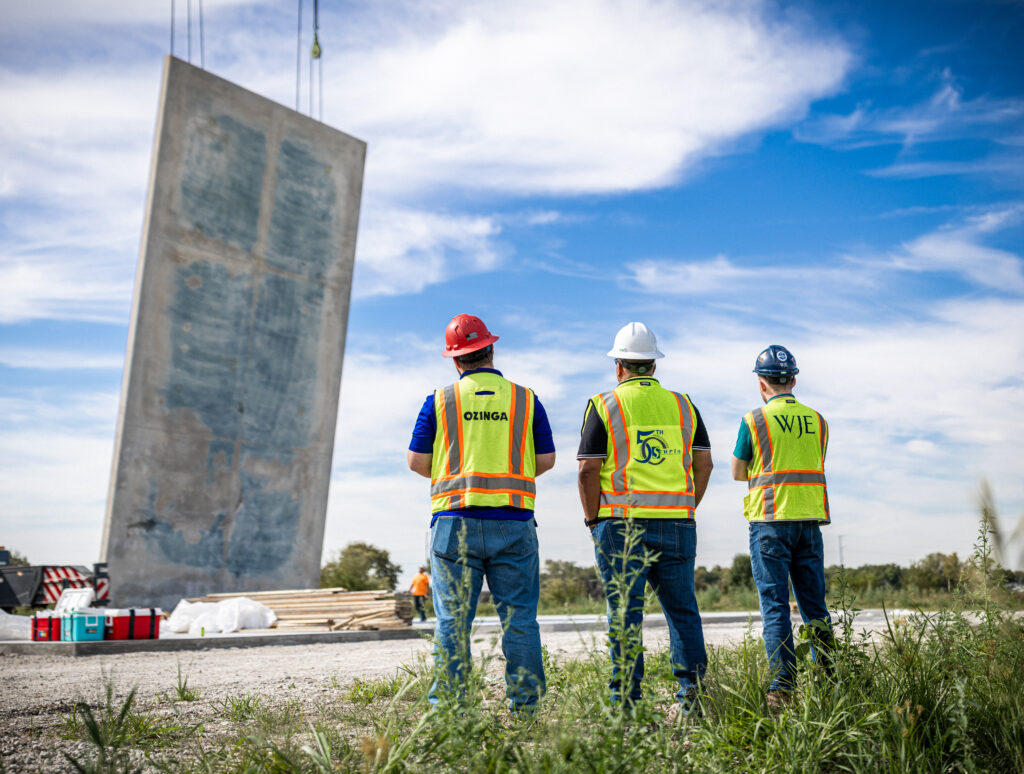
Tilt-Up Panel Pour: A tilt panel mix using CarbonSense® Cement was poured, tested, and erected using an industrial crane, with flexural strength data captured at the critical three-day mark required for safe panel installation.
This rigorous, side-by-side testing approach allowed all stakeholders to make direct, data-driven comparisons between the traditional mix and the CarbonSense® alternative.
Results
The results of the pilot program demonstrated that CarbonSense® Cement delivers on both sustainability and performance:
Slab-on-Grade Application
- Achieved a global warming potential (GWP) score 60% lower than the regional benchmark established by the National Ready Mix Concrete Association (NRMCA)
- Delivered a 47% lower GWP compared to the portland limestone cement mix design
- Exceeded strength expectations, reaching 6,820 PSI at 28 days against a 4,000 PSI target
- Recorded less than 0.001% shrinkage, reflecting exceptional dimensional stability
Tilt-Up Panel Application
- Achieved the required 500 PSI flexural strength within three days, meeting the critical timeline for panel erection
- Delivered a 57% reduction in GWP compared to the regional benchmark
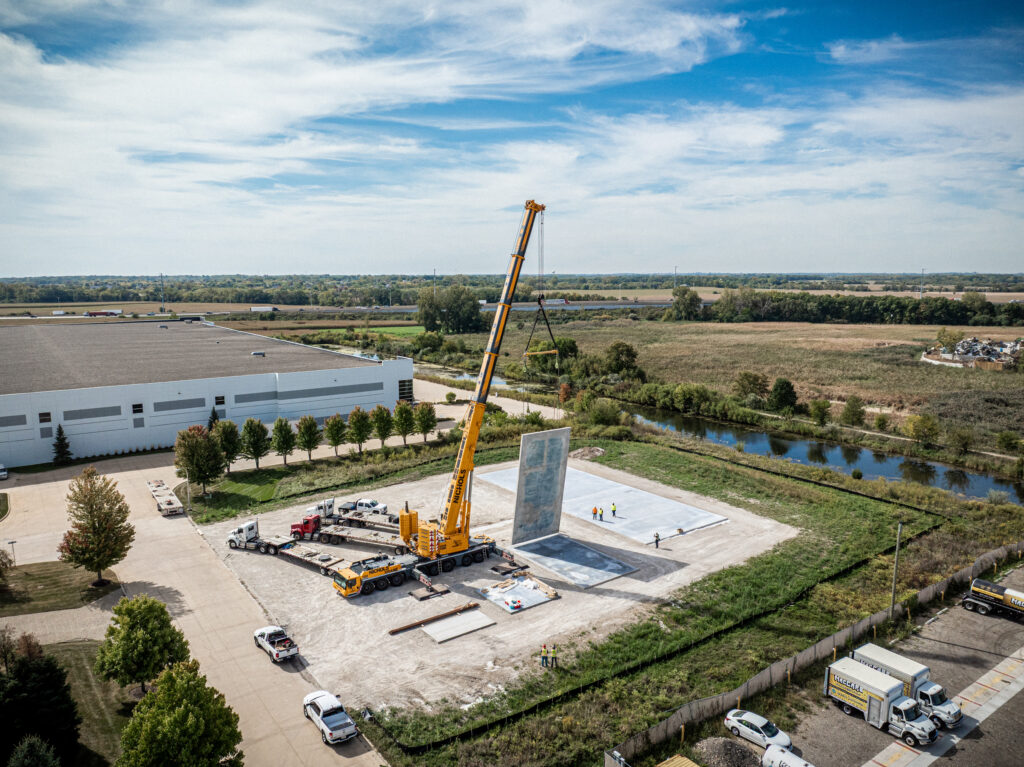
These outcomes confirm that CarbonSense® Cement, built to ASTM C1157 standards, performed above industry expectations while substantially reducing carbon emissions, proving that embodied carbon reduction does not require a trade-off in structural performance.
Conclusion
This pilot program underscores a core truth driving Ozinga’s sustainability mission: reducing embodied carbon in construction materials does not mean compromising on the performance builders and engineers depend on. By partnering with likeminded partners, Ozinga validated that CarbonSense® Cement can meet the rigorous demands of data center construction while delivering significant reductions in global warming potential.
As mission critical construction continues to expand to meet growing technology demands, partnerships like this one demonstrate a scalable path forward for the industry, one where sustainability and structural reliability work hand in hand. Ozinga remains committed to advancing research and development in low-carbon building materials, helping clients across industries meet their net-zero targets without sacrificing quality or safety.
Ready to explore how CarbonSense® can support your next project’s sustainability goals? Schedule a call with our team or request an EPD to learn more.