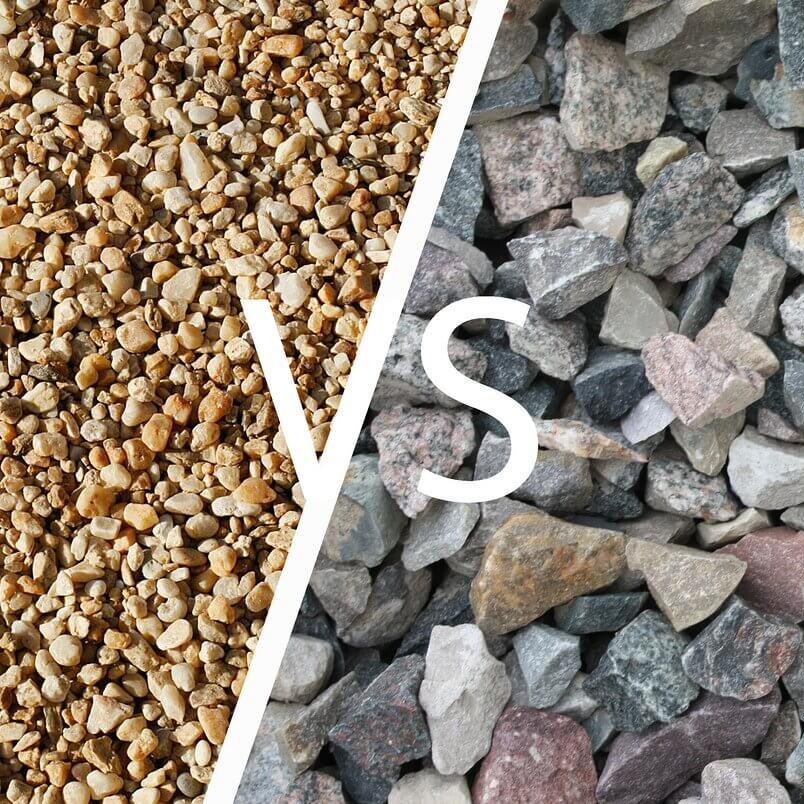
Recycled vs. Virgin Aggregates

When it comes to building materials like gravel and limestone, many homeowners question the differences between recycled vs. virgin. Although similar, each one offers its own unique benefits for your project. Before making a decision, use the following information to decide if your upcoming project would benefit from recycled or virgin aggregates.
WHAT ARE AGGREGATES?
Aggregates are necessary materials for building and repairing residential and commercial spaces, roads, and even railways. They come in many different styles and shapes, but they tend to fall into either one of two categories: virgin or recycled.
Virgin aggregate refers to products that have been newly mined from the ground. These are typically granular or crystalline rocks, and sand, gravel, and stone are all examples of virgin aggregate. Most virgin aggregate will come from a local mine or quarry, but it’s not unlikely that companies will have certain aggregates shipped to their project.
Instead of being mined, recycled aggregate material is made from crushed concrete. Unused concrete is returned to the plant, and the product is then crushed to an aggregate specification to create a new recycled product.
WHAT ARE AGGREGATES USED FOR?
Aggregates can be used for a variety of applications, including backfill, pipe bedding, subbase, shoulder stone, under paver bricks, and driveways. Some people prefer to use virgin aggregate because they believe it has a higher performance rating than recycled; however, from a product performance perspective, recycled aggregates are just as durable and strong as virgin.
WHAT ARE THE ENVIRONMENTAL DIFFERENCES?
The biggest difference between virgin and recycled aggregate is the impact on the environment. Virgin material needs to be mined, and this requires digging up land, using a variety of tools and equipment, and then processing the material for use. All of this can use valuable natural resources, cause pollution, and consume energy.
Since recycled aggregates are already coming from a previously existing product, they do not need to be mined for use. This allows companies to conserve the natural resources while also eliminating the need for products to take up space in a landfill.
WHAT ARE THE COST DIFFERENCES?
There are many factors that determine the cost of aggregate, and when comparing recycled vs. virgin aggregate, recycled is generally the more cost-effective option. Since companies don’t have to mine or produce new material, they can price the recycled material lower than the virgin material. Since recycled producers already have the raw material at their facility, costs are generally lower, and savings are passed on to the consumer.
In some instances, you may actually get more recycled material than virgin material for the same or a lower price. For example, recycled CA6 is 15% lighter than virgin CA6, so you receive 15% more volume per ton. All of this adds up to a significant cost savings.
Ozinga carries a full inventory of recycled and virgin aggregates for your building needs. Contact a materials specialist today to learn more about which product is the right choice for your project.